
Your Body Has Been Holding On. Here’s How To Help It Finally Let Go.
You’ve probably heard that trauma lives in the body. Maybe someone said it to you once and it stuck. Maybe you’ve felt it yourself — the tension in your shoulders that never fully leaves, the tightness in your chest when something triggers a memory, the exhaustion that sleep doesn’t seem to fix.
Trauma release massage is built on exactly that understanding. It’s not a luxury. It’s not just relaxation. It’s a way of working with the body to help it finally let go of what the mind has been carrying for years.
For many people, trauma release massage works best alongside trauma therapy — bodywork addresses what lives in the nervous system while therapy works with the narrative around it.
Why Trauma Doesn’t Just Live in Your Mind
Most people think of trauma as a mental experience — something that happened, something you remember, something you work through by talking about it. But the body keeps its own record.
When something overwhelming happens, your nervous system responds instantly. Heart rate spikes. Muscles tighten. Breath shortens. That’s your body doing exactly what it’s supposed to do — protecting you. The problem is that for many trauma survivors, the body never fully gets the signal that the threat is over. It stays braced. It stays ready.
Over time, that shows up as chronic tension, persistent fatigue, difficulty sleeping, emotional numbness, or a constant low-level sense of unease — even when life on the outside looks fine.
What Stored Trauma Feels Like in the Body
Stored trauma doesn’t always announce itself clearly. It can feel like:
- Muscles that are perpetually tight, especially in the neck, shoulders, hips, or jaw
- A nervous system that’s always slightly on edge
- Physical symptoms with no clear medical explanation
- Feeling disconnected from your own body
- Exhaustion that rest doesn’t seem to touch
If any of that sounds familiar, your body may be holding something it hasn’t been able to release yet.
What Massage Therapy for Trauma Survivors Actually Addresses
Massage therapy for trauma survivors isn’t about working out knots or loosening tight muscles for their own sake. It’s about communicating safety to a nervous system that has been in protection mode, sometimes for years.
That distinction matters. A trauma-informed therapist isn’t just applying pressure to sore spots. They’re working with your body’s responses in real time — noticing when you tense up, adjusting pace and pressure accordingly, and creating an experience where your body gradually learns that it doesn’t need to stay guarded.
The goal isn’t just to feel good for an hour. It’s to help your body build a new baseline — one where relaxation is possible and safety feels real.
Is Trauma Massage Different From Regular Massage
This is one of the most common questions people have, and it’s worth being direct about: is trauma massage different from regular massage? Yes, significantly.
A standard massage focuses on physical relaxation — loosening muscles, improving circulation, reducing surface tension. It can feel great. But for someone carrying unresolved trauma, it can also feel overwhelming, activating, or emotionally destabilizing if the therapist isn’t trained to work with the nervous system.
Trauma release massage is different in a few key ways:
- Pace — Sessions move slowly and intentionally, never rushing the body
- Consent and control — You’re checked in with throughout; nothing happens without your awareness
- Nervous system awareness — The therapist tracks your responses and adjusts in real time
- Emotional safety — The space is designed to feel containing, not just comfortable
What Happens During a Trauma Release Massage
If you’ve never had one, it’s natural to wonder what happens during a trauma release massage — especially if your relationship with touch has been complicated by what you’ve been through.
Sessions typically begin with a conversation. Your therapist will want to understand where you are, what you’re hoping for, and any areas of your body or experience that need extra care. There’s no pressure to share more than you’re comfortable with.
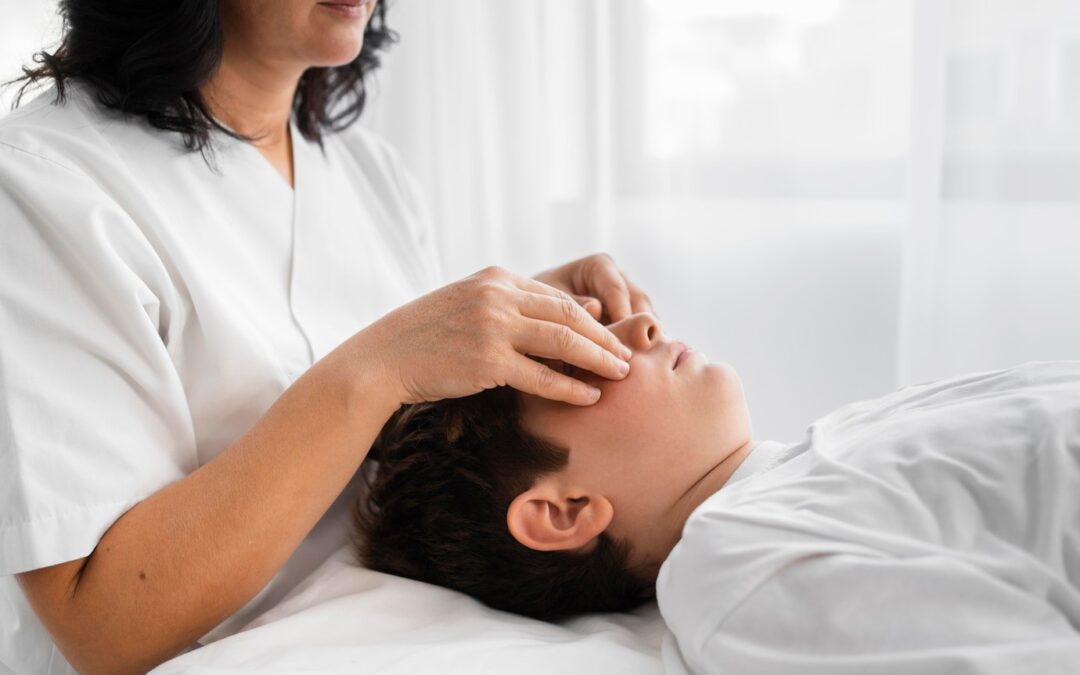
The bodywork itself tends to be slower and more deliberate than a standard massage. Your therapist may spend significant time on areas where trauma commonly accumulates — the hips, the diaphragm, the shoulders, the base of the skull. You might notice emotions surfacing. That’s not a sign something is going wrong. It’s often a sign something is finally releasing.
What Your Body Is Doing the Whole Time
Underneath the physical work, your nervous system is being invited to shift. With each slow, intentional touch, your brain receives a signal: this is safe. You can let go. That signal, repeated consistently, begins to loosen the grip that stored trauma has on your body.
Some people feel deeply relaxed during a session. Some feel emotional. Some feel very little at the time but notice significant shifts in the days that follow — better sleep, less tension, a quieter internal state.
Massage for Nervous System Regulation — Why That Matters
Massage for nervous system regulation is at the heart of why trauma release massage works at all. To understand it, it helps to know a little about what your nervous system is actually doing when trauma is present.
Your autonomic nervous system has two primary modes: sympathetic (fight-or-flight) and parasympathetic (rest-and-digest). Trauma keeps the sympathetic system activated long past the point when activation is useful. Your body is essentially stuck in alert mode.
The Shift From Fight-or-Flight to Rest and Digest
Trauma release massage works directly with this dynamic. Slow, safe, predictable touch stimulates the parasympathetic nervous system — the part responsible for calm, restoration, and healing. Over time and with consistent sessions, this helps your body:
- Lower baseline cortisol levels
- Restore natural sleep rhythms
- Reduce hypervigilance and startle responses
- Improve emotional regulation
- Feel more at home in your own skin
This isn’t a metaphor. These are measurable physiological shifts that happen when the nervous system finally gets to exhale.
Massage Therapy for PTSD — What the Research and Experience Show
Massage therapy for PTSD is increasingly recognized as a meaningful complement to traditional trauma treatment. Talk therapy is valuable — but it primarily engages the cognitive, language-based parts of the brain. Trauma, particularly complex or early trauma, is often stored in parts of the nervous system that words don’t reach as easily.
Bodywork creates a different kind of access. It works bottom-up — starting with the body and the nervous system rather than top-down through analysis and insight. For many people with PTSD, this is the missing piece.
Sleep, Hypervigilance, and Emotional Release
Three of the most common experiences people with PTSD report — disrupted sleep, chronic hypervigilance, and emotional numbness or overwhelm — all respond to the nervous system regulation that trauma release massage supports.
When your body learns to feel safe, sleep becomes more accessible. When hypervigilance softens, daily life becomes less exhausting. When emotional release happens in a supported environment, it stops feeling like a threat and starts feeling like relief.
Who Can Benefit From Trauma Release Massage
It’s easy to assume this kind of work is only for people with a formal diagnosis or a clearly defined traumatic event. That’s not the case.
If your body carries tension you can’t explain, if you feel chronically overwhelmed, if you’ve done talk therapy and feel like something is still stuck — trauma release massage may be exactly what your healing has been missing.
If you’re ready to experience this kind of care firsthand, our therapeutic massage services are designed with exactly this in mind.
You Don’t Have to Have a Diagnosis to Deserve This
Grief, chronic stress, childhood emotional neglect, difficult relationships, years of pushing through — these all leave marks in the body. You don’t need a label to benefit from work that helps your nervous system feel safe again.
If your body has been through something hard, it deserves support. That’s enough.
How to Prepare for Your First Session
Knowing how to prepare for an emotional release massage can make a real difference in how the experience lands — especially if it’s your first time.
What to Do Before, During, and After
Before your session:
- Hydrate well in the days leading up to it
- Eat lightly — a heavy meal beforehand can make it harder to relax and stay present
- Get a full night of sleep if you can
- Spend a few minutes beforehand with slow, intentional breathing
- Think briefly about what you’re hoping to feel or release — having a loose intention helps
During your session:
- Communicate with your therapist — if something feels like too much, say so
- Try to stay with your breath rather than analyzing what’s happening
- Let emotions come if they surface — they’re part of the process
After your session:
- Give yourself time to rest; don’t schedule demanding things immediately after
- Drink water and eat something nourishing
- Journal if it feels right — emotions can continue to surface in the hours that follow
- Be gentle with yourself; what just happened was significant
Frequently Asked Questions About Trauma Release Massage
What is trauma release massage?
Trauma release massage is a body-based therapeutic approach designed to help release stored trauma from the muscles and nervous system. Unlike a standard relaxation massage, it works with the body’s trauma responses — using slow, intentional, trauma-informed touch to help the nervous system move from a state of chronic activation into one of safety and rest.
How do I know if I have stored trauma in my body?
Stored trauma can show up in many ways — chronic muscle tension, sleep difficulties, emotional numbness, hypervigilance, fatigue that rest doesn’t relieve, or a persistent sense of being on edge. You don’t need a formal diagnosis to recognize that your body is holding something. If these experiences feel familiar, it may be worth exploring trauma-informed bodywork.
How many sessions does it take to feel a difference?
This varies from person to person. Some people notice shifts after a single session — better sleep, reduced tension, a quieter nervous system. For deeper or longer-held trauma, consistent sessions over time tend to produce the most lasting results. Your therapist can help you build a plan that makes sense for where you are.
Is trauma release massage safe if I have PTSD?
Yes, when performed by a trained trauma-informed therapist. The approach is specifically designed to work within your nervous system’s window of tolerance — never pushing past what your body can handle. Open communication with your therapist before and during sessions is important, and a good therapist will always follow your lead.
Can trauma release massage help with sleep problems?
Yes. Many people with trauma-related sleep disruptions — including insomnia, nightmares, and difficulty staying asleep — find that nervous system regulation through trauma-informed bodywork helps restore more natural sleep patterns. When the body learns to feel safe, rest becomes more accessible.
What should I expect to feel after a session?
Experiences vary widely. Some people feel deeply relaxed, almost floaty. Others feel emotional or tired. Some notice very little immediately but experience meaningful shifts in the days that follow. All of these responses are normal. Giving yourself time and space after a session — rather than rushing back into a full schedule — helps your body integrate what happened.
Recent Comments